TRILOK NAKRANI’S RESULTS DNA Report
Gene Pool Percentages
All Gene Pools Data
Origin: Endemic to south eastern india with residues in Pakistan
Origin: Endemic to Indian (Pulayar) with residues in India (Paniya, Savara, Bengali, Juang, Savara, Ho, Bonda)
Origin: Peaks in North India (Dharkars, Kanjars) and declines in Pakistan
Origin: Peaks in south Siberia (Russians: Tuvinian) and declines in North Mongolia
Origin: Peaks in Taiwan and Malay and declines in Thailand, Vietnam, Cambodia, and South China
Origin: Peaks in Krasnoyarsk Krai and declines towards east Russia
Origin: Peaks in south France and declines in north France, England, Orkney islands, and Scandinavia
Origin: Peaks in the Iceland and Norway and declines in Finland, England, and France
Origin: This gene pool is localized to Israel with residues in Syria
Origin: Peaks in the Orkney islands and declines in England, France, Germany, Belarus, and Poland
Origin: Peaks in Papua New Guinea and declines in Australia
Origin: Peaks in Central-North America and declines towards Greenland and Eskimos
Origin: Peaks in Mexico and Central America with residues in Peru
Origin: Peaks in Korea, Chinese (Han), Mynamar, Japan, and Vietnam and declines towards West China and India
Origin: Peaks in Peru, Mexico, and North America and declines in Eastern Russia
Origin: Peaks in Bougainville and declines in Australia
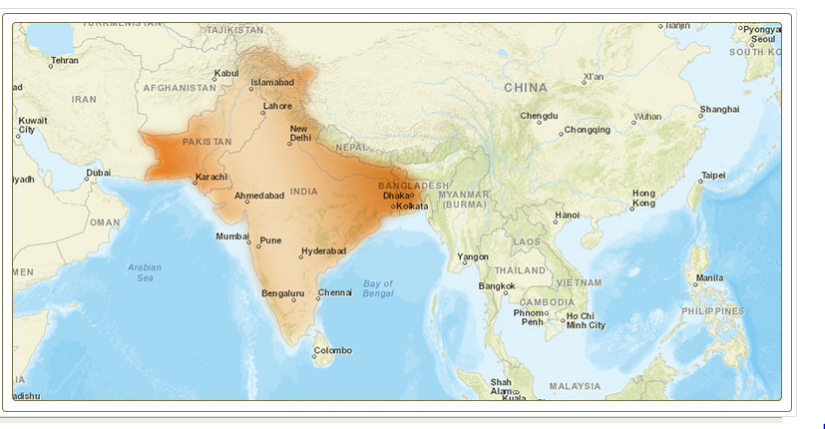
Southeastern India
Origin & Connection:
42.5% of your genetic heritage have strong ancestral connection to Southeastern Indian gene pool & Origin of this southeastern gene pool endemic to south eastern india with residues in Pakistan. Such groups include the Pulyar, Paniya, Bonda, Asur, which are all visible within Southeast India.
Ancient Origins and Early Migration:
There is evidence of early human habitation in India dating back to the Middle Paleolithic, with an ancient human species called Homo erectus leaving behind a stone tool culture known as the Soanian. Modern humans arrived in the subcontinent 40,000 – 65,000 years ago and are not thought to have interbred with this earlier human species. Migration into Southern India may have proceeded along the coasts, and there is some genetic evidence to support this.
Agriculture arrived in Northwest India by 8,000 years ago. The earliest evidence of agricultural practices has been found in present day Pakistan at a site called Mehrgarh. Agriculture may have spread down the coasts and some researchers believe that many of the areas originally inhabited by early farmers are now below sea level. The effects of Middle Eastern influence on India can be seen today in the split between Indo-Iranian language in the north and the Dravidian language in the south. It is thought that the Indo-Iranian languages may have arrived with the diffusion of agriculture from the West and the Dravidian languages, which may have been spoken throughout India at one time, became limited to the south.
Heritage and Cultural Identity
Southeast India has long been influenced by multiple empires and kingdoms coming from both the north and west. Northern India was the origin of India’s earliest civilizations, having had contact with early Middle Eastern agriculture, allowing it to come to early dominance. One of the major distinctions between the North and South is language, with the southern people speaking Dravidic languages, while Indo-Iranian languages are present in the north. In particular, the Tamil language is spoken in Southeast India, and is associated with a strong cultural connection to the people of Northern Sri Lanka. Southeastern Indians appear distinct from their northern counterparts, often with a darker appearance.
Historical Transformations and Genetic Legacy:
Complex societies first appeared in Northwest India in the form of the Indus Valley Civilization, which occurs in archaeological records between 5,000 and 3,000 years ago. The Indus Valley cultures were followed by the Vedic period in the North, which lasted between 1800 and 500 B.C. The transition to iron production occurred during this time. The Sanskrit writing system was developed and cultural practices spread south and throughout the Indian subcontinent. In Northwest India, the Mauryan Empire ruled between 322 and 185 B.C. and expanded its reach into Southern India.
While much of early Indian history is focused in the north, in part due to the proximity to the Middle East and the origin of agriculture, the south eventually developed large kingdoms and empires as well. In Karnataka, in Southwest India, the Satavahana Dynasty appeared circa 670 B.C. and lasted until 220 B.C., roughly corresponding to the split between the Tamil and Western Dravidian languages. The Satavahana later divided into several independent kingdoms. The earliest Tamil scripts appeared around the start of the 1st millennia, contemporareous with the rise of the Chola Dynasty. Another major political body that rose to prominence in the region was the Pallava Dynasty of the 3rd century A.D. This was an ethnic Tamil state that ruled over Southeastern India, being replaced by the Pandyan Kingdom of the 6th to 14th centuries. Much of this area later came under control of the Vijaynagara Empire between 1300 and 1700 A.D., which ruled over most of Southern India. This state constituted a major regional check against the Muslim Delhi and Deccan Sultanates to the north, which had risen in the 14th century. In subsequent centuries, the rise of British East India Company colonial interference by European powers brought control of India within the British Empire.
Genetics Study & Future Scopes:
Indian genetics have fascinated many scientists in recent years. A large range of genetic variability has been documented between regions. Some researchers have suggested there has been little population replacement despite the arrival of agriculture. Mitochondrial DNA studies have indicated that ancient migrations occurred along coastal routes. Analysis of mitochondrial and Y-chromosome DNA lineages for different Indian castes has been contentious, but there is some evidence for a higher proportion of western Eurasian Y-chromosome lineages in high caste males. While migration of people from other regions surrounding India has been facilitated by the transition to agriculture, it is likely that many of the more isolated groups that are identified within lower castes share more genetic continuity with local Asian lineages than more recent European and Middle Eastern admixture.
Future testing may be able to distinguish better between particular regions of India. They may also clarify much of the ambiguity surrounding migration routes and ancient versus more modern lineages of people from different caste backgrounds.
Southwestern India
Origin & Connection:
8.8% of your genetic heritage deeply connected to ancient indigenous communities such as the Pulayar with residue of related tribal populations Paniya, Savara, Bengali, Juang, Savara, Ho, Bonda across India.
Ancient Origins and Early Migration:
Fossil evidence has been found of an early human species called Homo erectus that dates back to the Middle Paleolithic. These early humans are associated with a stone tool culture known as the Soanian. Modern humans, arrived in the region between 40,000 and 65,000 years ago, and are not thought to have interbred with the ancient humans already living there, who eventually disappeared. It is thought that migration into southern India may have occurred along the coasts, and there is some genetic evidence to support this.
Farming culture spread from the Middle East into Northern India. The earliest evidence for an agricultural society has been discovered at Mehrgarh, now part of Pakistan. Some researchers have suggested that evidence for Neolithic societies is now below sea level, with some archaeological materials found on the seabed dating to 5500 B.C. There is a linguistic division in India today between Indo-Iranian languages in the north and Dravidian languages in the south. It is thought that the Indo-Iranian languages may have arrived as a later diffusion from further west and Dravidian languages, having once existed throughout India, were pushed further south.
Heritage and Cultural Identity:
Southwest India is known for its ancient cultures and temple complexes, as well as its world famous cuisine. The region has been shaped by the influences of many different empires throughout history. Southern Indians are characterized by a distinct appearance, often with darker skin and flatter faces. They also share a different linguistic history compared with their northern Indian counterparts with southern Indian known for Dravidic languages and Indo-Iranian languages being more prevalent in the north.
Historical Transformations and Genetic Legacy:
The rise of the first complex civilizations in India began in the Northwest. The Indus Valley Civilization appeared in Northwest India in what is now present day Pakistan between 5,000 and 3,000 years ago, and rapidly urbanized. The Indus valley cultures were followed by the Vedic period, which lasted from 1800 to 500 B.C., and was again focused in Northern India. The transition to iron production occurred during this time. The Sanskrit writing system was developed and there was a spread south of cultural influences throughout India. In Northwest India, the Mauryan Empire came to prominence between 322 and 185 B.C. and expanded into Southern India.
Much of early Indian history is focused in the north due to the early rise of complex civilization there, which were very much a consequence of close proximity to the Middle East and the origins of agriculture. However, the people of the south subsequently developed large kingdoms and empires. In the area of what is now Karnataka, the Southern Indian Satavahana Dynasty appeared in 670 B.C. and lasted until 220 B.C., roughly corresponding to the divergence of the Tamil and Western Dravidian languages. The Satavahana later split into several independent kingdoms.
The Hoysala Empire formed in the 11th century and is known for its grand temple architecture and the flowering of literature. This was followed by the Vijaynagara Empire of 1300 to 1700 A.D., which ruled over most of Southern India. This state was a major opposing force to the Muslim Delhi and Deccan Sultanates to the north, which had developed since the 14th century. In subsequent centuries, increasing interactions occurred between Southwest India and European traders, with the Dutch having a significant impact in Goa. This region also became involved in the spice trade through the British British East India Company, eventually becoming part of the Indian colony that formed part of the British Empire.
Genetics Study & Future Scopes:
Indian genetics have fascinated many scientists in recent years, and large genetic differences have been documented between regions of the subcontinent. Some results have pointed to little population replacement even after the arrival of agriculture. Mitochondrial DNA studies have indicated that ancient migrations occurred along coastal routes. Analysis of mitochondrial DNA and Y-chromosome data looking at different Indian castes have been contentious, but there is some evidence for a higher proportion of Western Eurasian Y-chromosome content in high caste males. While migration of people from other areas has been facilitated by the transition to agriculture, it is likely that many of the more isolated groups that are identified within lower castes share more genetic continuity with local Asian lineages than more recent European and Middle Eastern admixture.
Future testing may be able to better distinguish between particular regions of India. Such tests may also be able to clarify much of the ambiguity surrounding migration routes and ancient vs. more modern lineages of people from different caste backgrounds. Tests may also be able to predict the languages of one’s recent ancestors.
Northern India
Origin & Connection:
your DNA carries 8.7% Northern Indian ancestry, linked to ancient populations that reached their highest presence among communities such as the Dharkar and Kanjar. This lineage reflects historical roots in the northern plains of India, with traces gradually fading westward into present-day Pakistan, echoing centuries of migration and cultural exchange across the region.
Genetics Study & Future Scopes:
A wide range of genetic variability has been documented within India. Some evidence points to little population replacement since the arrival of agriculture. Mitochondrial DNA studies have indicated that ancient migrations occurred along coastal routes. Analyses of mitochondrial DNA and Y-chromosome data looking at different Indian castes have been contentious, but there is some evidence for a higher proportion of Y-chromosomes of western origin in higher caste males. While migration of people from other areas has been facilitated through the transition to agriculture, it is likely that many of the more isolated groups that are identified within lower castes share more genetic continuity with local Asian lineages than more recent European and Middle Eastern admixtures. Recent investigations into relatively isolated minorities such as Kanjars, Dharkars and Dusadh have found unique lineages from Northern India.
Future testing may be able to distinguish better between particular regions of India. Such testing may also clarify much of the ambiguity surrounding migration routes and ancient compared or more modern lineages of people from different caste backgrounds.
